In this guide
Affiliate disclosure: As an Amazon Associate I earn from qualifying purchases. The Amazon links below use the Crawford Select Pets tracking ID. We do not copy Amazon prices, ratings, or product images; confirm current details on Amazon before buying.
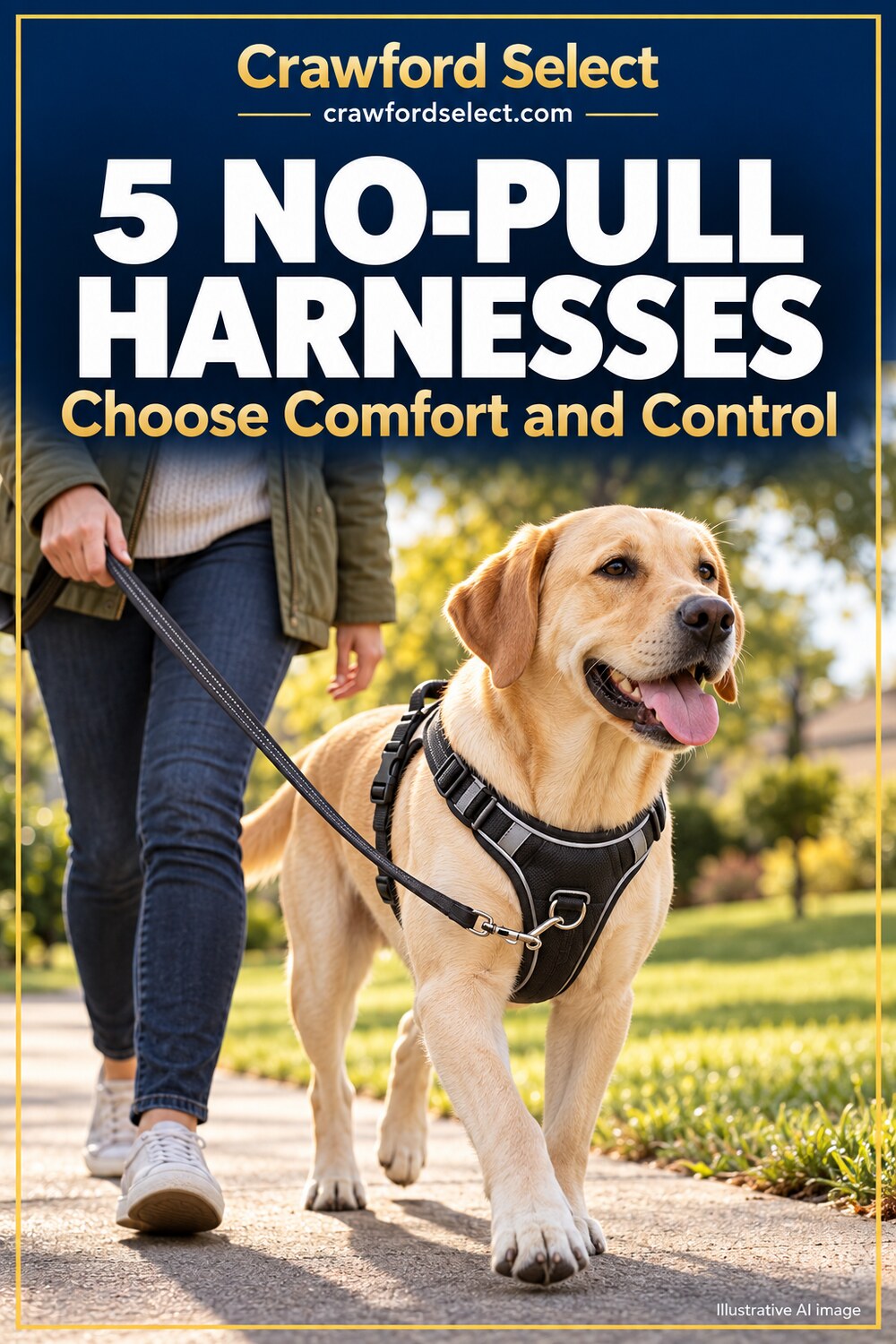
A large dog can turn a routine walk into a leverage contest. A well-fitted front-clip or dual-clip harness can redirect forward momentum without putting all the pressure on the neck, but no harness trains a dog by itself. Our picks favor secure hardware, useful adjustment, clear manufacturer guidance, and designs suited to different dogs—not marketplace popularity.
Our quick picks
| Best for | Harness |
|---|---|
| Best overall control | 2 Hounds Design Freedom |
| Best precise fit | Blue-9 Balance |
| Best simple budget option | PetSafe Easy Walk |
| Best padded everyday harness | Ruffwear Front Range |
| Best for backing out | Ruffwear Flagline |
2 Hounds Design Freedom No-Pull Harness
Why it stands out: front and back leash connections give owners several ways to manage a powerful puller. The back connection tightens gently across the chest when the dog pulls, while the front ring provides steering. The maker also offers a double-ended training leash designed for both points.
Best for: strong dogs whose owners want maximum control and are comfortable learning a two-point setup.
Tradeoffs: more straps mean a little more fitting work, and some dogs may prefer a padded vest-style design. Measure carefully and follow the current size chart.
Check current options on Amazon →Blue-9 Balance Harness
Why it stands out: six adjustment points make this one of the strongest options for dogs that are difficult to fit. Blue-9 describes it as a non-restrictive design intended to preserve range of motion, with front and back leash rings.
Best for: deep-chested, narrow-waisted, or otherwise hard-to-fit dogs and owners who prioritize shoulder clearance.
Tradeoffs: the minimalist webbing has less padding than vest-style harnesses, and dialing in six points takes patience the first time.
Check current options on Amazon →PetSafe Easy Walk No-Pull Harness
Why it stands out: the front attachment redirects a pulling dog toward the handler, and the light strap construction is simple once fitted. It is a sensible first no-pull harness for owners who do not need padding or a back connection.
Best for: everyday neighborhood walks and buyers seeking a straightforward, widely available option.
Tradeoffs: it has less coverage and fewer control configurations than dual-clip choices. A loose chest strap can shift or rub, so fit matters.
Check current options on Amazon →Ruffwear Front Range Harness
Why it stands out: this padded everyday harness combines an aluminum back ring with a reinforced front attachment and four adjustment points. It offers more body coverage and comfort than simple strap harnesses.
Best for: longer walks, day hikes, and dogs that benefit from padding while still needing a front connection.
Tradeoffs: its front attachment is fabric-reinforced rather than a metal ring, and bulkier padding may run warmer in hot weather.
Check current options on Amazon →Ruffwear Flagline Harness
Why it stands out: a third belly strap adds security for dogs prone to backing out, while front and back leash attachments and a handle add control. It is a lightweight, extended-coverage choice rather than a basic training harness.
Best for: slim dogs, cautious dogs, trail use, and situations where escape resistance matters as much as pulling control.
Tradeoffs: it costs more and is more harness than many neighborhood walkers need. The handle is for controlled assistance—not lifting a dog by the harness.
Check current options on Amazon →How we chose
We compared current manufacturer descriptions and fitting guidance, emphasizing front or dual leash attachment, adjustability, shoulder freedom, hardware, large-dog sizing, and a clear reason to choose each product. These are editorial recommendations based on documented design and use case; we are not claiming hands-on testing.
How to fit a no-pull harness
- Measure around the widest part of the chest and the base of the neck; do not choose by weight alone.
- Use the manufacturer’s current chart because sizes are not standardized across brands.
- Center the chest piece and keep straps flat, clear of the armpits, and away from the shoulder joint.
- Adjust snugly enough to prevent backing out while allowing comfortable breathing and movement.
- Test indoors, then observe walking, turning, sitting, and stairs before a full outing.
- Recheck fit after the first few walks and after weight or coat changes.
Front clip, back clip, or both?
| Connection | Best use | Main limitation |
|---|---|---|
| Front | Steering and redirecting forward pull | Can rotate if the harness is loose |
| Back | Comfortable walking after leash skills improve | Provides less steering leverage |
| Dual | Two-point control and flexible training | Works best with a compatible leash and practice |
Safety note
A harness is management equipment, not a cure for pulling or reactivity. Pair it with reward-based leash training. Stop using any harness that causes rubbing, gait changes, coughing, or pain, and consult a veterinarian for health concerns or a qualified humane trainer for serious reactivity. Never leave a harness on an unattended dog where it may snag.
Bottom line
The 2 Hounds Design Freedom is our best overall choice when control is the priority. Choose the Blue-9 Balance for exact adjustment, the PetSafe Easy Walk for simplicity and value, the Ruffwear Front Range for padded everyday comfort, or the Ruffwear Flagline when backing out is the bigger risk.
Related buying guides
Best dog ramps for beds and SUVs for large dogs →
How long should a dog ramp be? →
Best cordless stick vacuums for pet hair →